
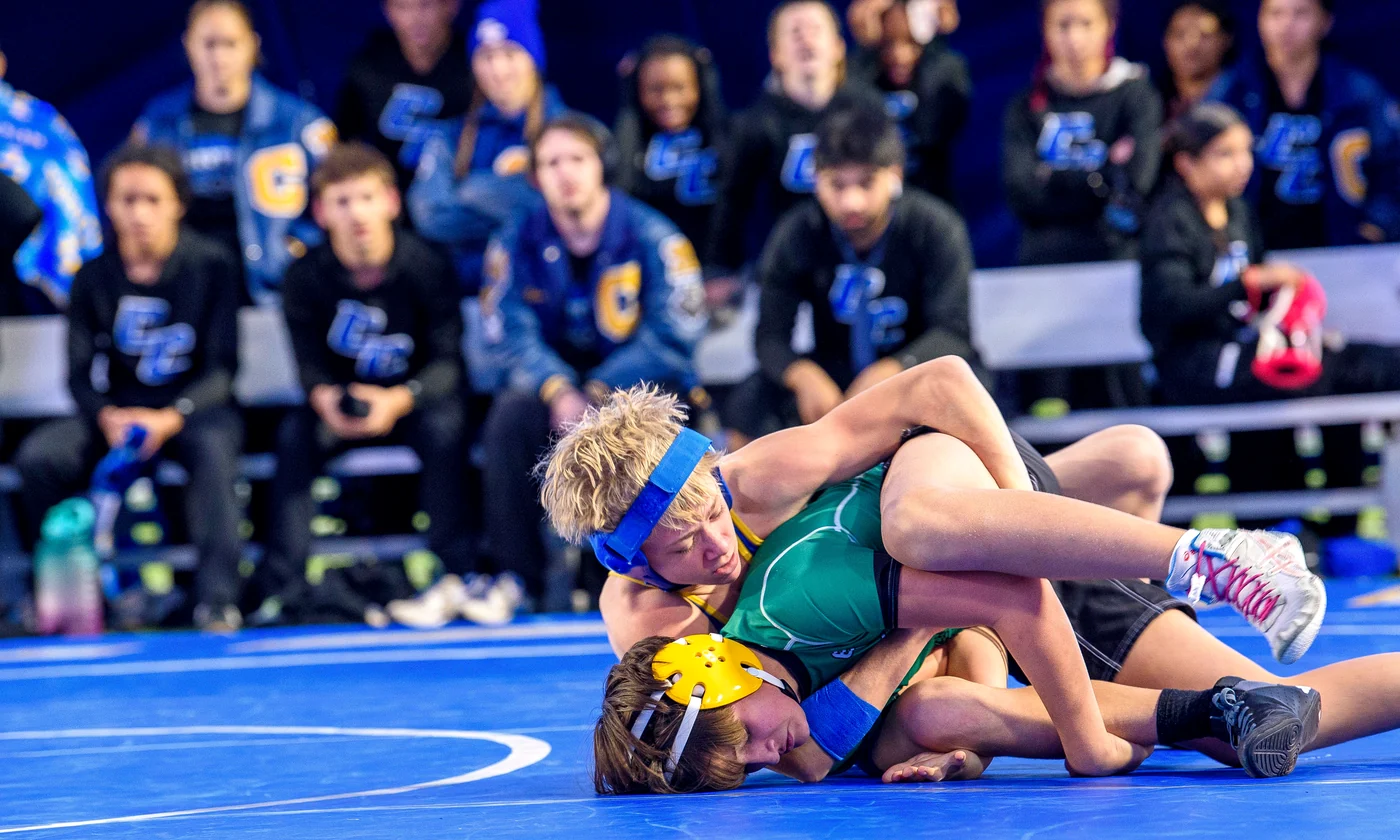
Wrestling conditioning is not measured by how exhausted an athlete looks. It is measured by whether the athlete can make correct technical decisions when breathing hard, recover during short breaks, and produce another scoring action late.
Condition the actions that matter
Freestyle competition demands repeated level changes, explosive finishes, hand-fighting pressure, short scrambles, and isometric control. Training should reflect those demands. Long, slow conditioning may support general fitness, but it cannot replace high-quality wrestling intervals.
Use three-part practice blocks
Build rounds that mirror professional three-period pacing: a high-output first period, brief recovery, a second period with tactical constraints, another brief recovery, and a final period that begins from a score-dependent situation. Change the score so athletes learn when to attack, protect criteria, or force a step-out.
Recovery is a skill
During short breaks, athletes should control breathing, receive one or two coaching cues, take appropriate fluid, and reset posture. Too much information wastes the recovery window. Coaches should practice the break routine before competition.
Protect technical quality
When fatigue destroys stance, head position, and decision making, the drill has moved beyond productive conditioning. Stop, reset, or reduce duration. The purpose is to preserve dangerous technique under fatigue—not rehearse bad positions.
A well-conditioned wrestler is not merely difficult to tire. A well-conditioned wrestler remains capable of scoring.
Turn the idea into a practice plan.
Ask Iron Wings how this position fits the athlete's current program and competition goals.
Request guidance