
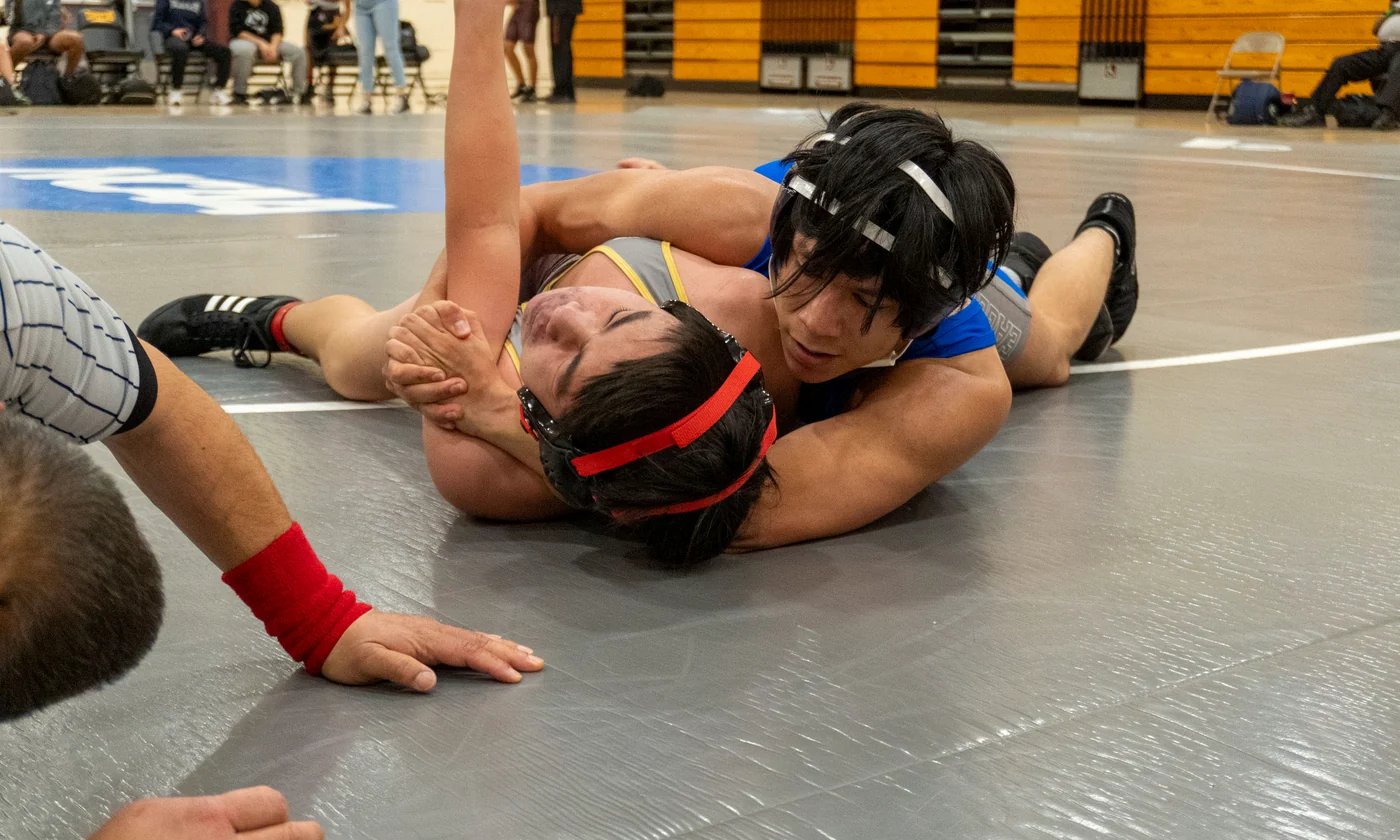
Freestyle athletes often treat the boundary as a surprise. It should be trained as deliberately as a single-leg finish or front-head position. The circle changes what both athletes can safely do.
Know who owns the center
The athlete with center position has more directional options. The athlete near the edge has less room to circle and a greater risk of conceding a step-out. Pressure should be purposeful: close exits, keep the hips underneath, and avoid leaning so far forward that the opponent can redirect.
Attack the retreat
When an opponent backs toward the boundary, the feet often square and the stance rises. This can create clean leg attacks, snaps, or body-lock entries. Train the athlete to recognize the step before rushing blindly.
Finish without following out
A takedown attempt near the line can become a score for either athlete. Practice finishing with control, keeping the supporting foot and hips inside, and understanding when to release a dangerous position rather than concede a larger score.
Use score and time
Boundary decisions change when criteria, match time, or a shot clock changes. An athlete protecting a lead may need center control without unnecessary risk. An athlete trailing may need to create immediate pressure and force a clear action.
The edge is not where wrestling stops. It is where tactical discipline becomes visible.
Turn the idea into a practice plan.
Ask Iron Wings how this position fits the athlete's current program and competition goals.
Request guidance