
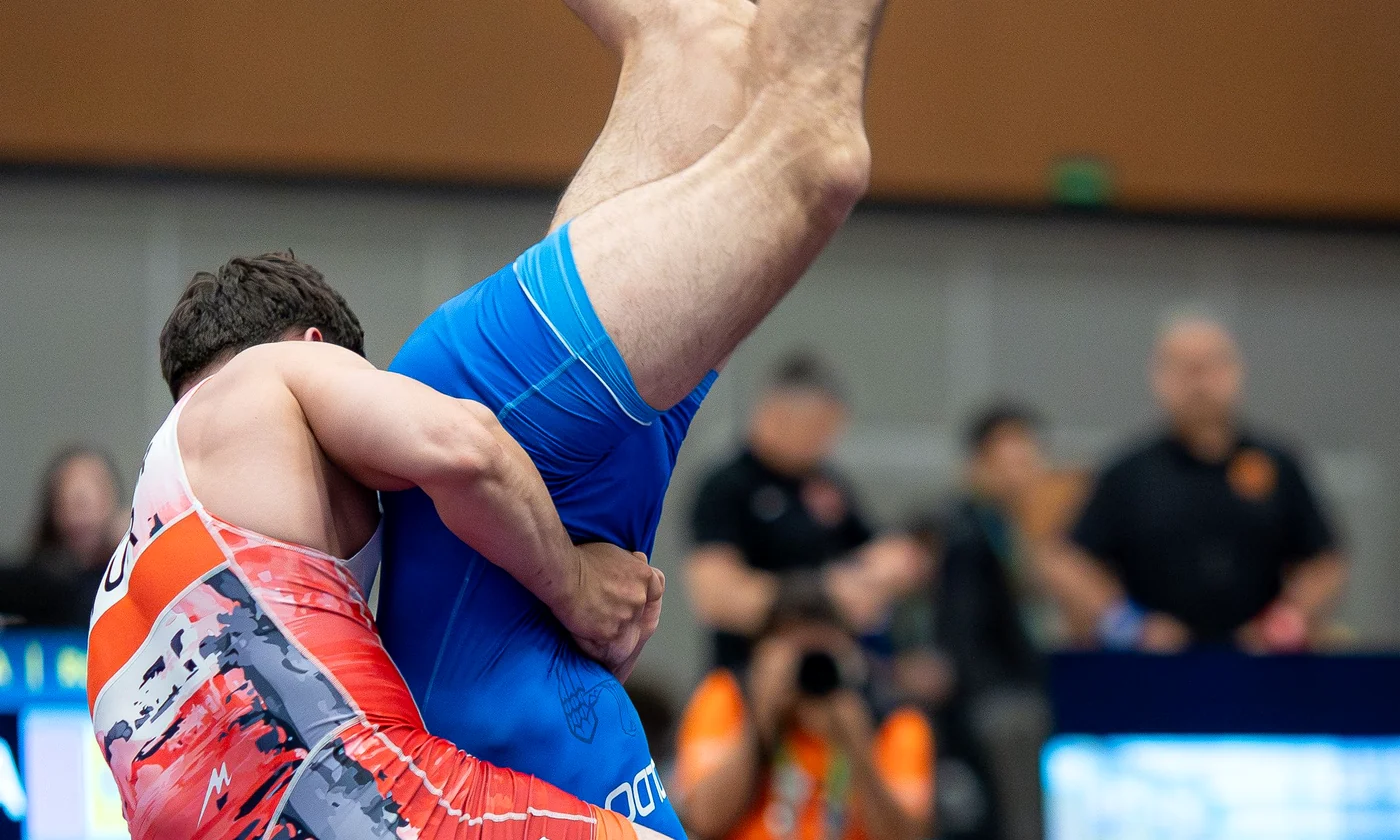
A clean first attack is valuable. A complete attack chain is dependable. At higher levels, opponents expect the first shot, protect the lead leg, and know how to force a finish into a difficult position. The athlete who stops after the first defense gives the match back.
Build families, not collections
Do not collect ten unrelated takedowns. Build a family around one reliable entry. A high-crotch can connect to a double, run-the-pipe finish, crackdown, or far-knee block. A single leg can connect to shelf finishes, outside trips, mat returns, or a rear-body-lock transition. The reactions determine the branch.
Reattack before the opponent resets
Many of the best scoring opportunities appear after an opponent defends. A sprawl creates a front-head position. A hard down block creates a post and angle. A failed snap creates forward pressure. Train the transition immediately, before both wrestlers return to neutral posture.
Use decision cues
Every chain should have visible cues. If the opponent squares the hips, switch direction. If the far foot steps forward, attack it. If the opponent whizzers hard, change the height or move to the rear. If the head drops, capture the front headlock. Cues prevent athletes from forcing a memorized sequence against the wrong reaction.
Score the chain in practice
Give live rounds bonus value for the second attack, reattack, or transition. Start from the moment the first attack has been partially defended. Practice finishes near the boundary. Film the rounds and count how many times the athlete pauses after the first failure.
Chain wrestling is not faster movement for its own sake. It is the ability to recognize that the opponent’s defense has created the next attack.
Turn the idea into a practice plan.
Ask Iron Wings how this position fits the athlete's current program and competition goals.
Request guidance